The Great Gloucester Fishermen's Race
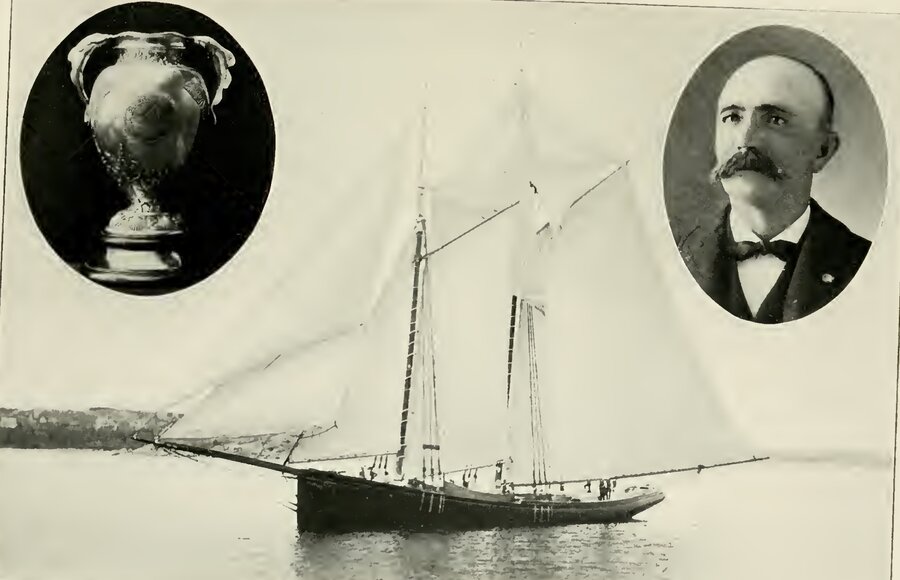
In August 1892 Gloucester, Massachusetts, marked 250 years since its incorporation as a town. The last day of the celebration, Friday, August 26, was saved for the event that mattered most: a race between the fastest schooners of the fleet, the “flying fishermen,” for a silver cup given by the yachtsman Henry S. Hovey. The cup’s handles were shaped like codfish.
The day opened with rain and a northeast gale. The course was a 41-mile triangle across Massachusetts Bay, from Eastern Point to a mark off Nahant, across to Minot’s Ledge, and back. In wind like that, a schooner would normally reef, tying down part of each sail to make it smaller. Nobody did. “To be the first to reef would make her the laughing stock of the town,” wrote William Hale, who sailed in the James S. Steele. The Ethel B. Jacobs took the early lead, then broke her main gaff jibing around the Nahant mark and dropped out. On the beat home the schooners sailed with their lee rails under and water up to the hatches, with two men at each wheel. “It is doubtful if ever a race was sailed under such savage conditions,” wrote one yachting reporter. The Harry L. Belden had come in from a fishing trip too late to get ready, and raced “just as she was.” Under Captain Maurice Whalen she won, her jibs torn but holding. The Nannie C. Bohlin was second and the Joseph Rowe third.
In 1946 the Gloucester poet Kitty Parsons told the story in The Race of the Flying Fishermen. Her ballad follows the race mark by mark, from the Jacobs’s broken gaff to the Rowe’s Captain Rube Cameron “tied to the wheel, / In water well up to his neck.” She may have had that detail from Cameron himself, since her book thanks “Captain Reuben Cameron” for his help.