Wreck of the Thomas W. Lawson
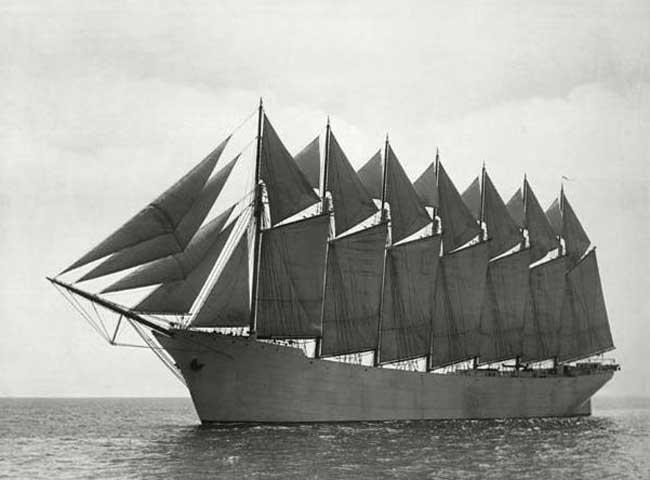
The Thomas W. Lawson set sail in 1902 as the only 7-mast schooner ever built. The steel-hulled ship, named for a Boston copper baron, had no auxiliary engine with which to haul coal and oil along the East Coast of the United States. The ship’s extreme weight made her sluggish and difficult to maneuver in port and she was recommissioned several times, leading to her final assignment tankering oil from the US to London.
Two days into her ill-fated voyage, six unable crewmen were brought on to replace those who quit over payment disputes. The journey across the Atlantic was further plagued by storms, and despite having lost most sails and all but one lifeboat, a breached hatch, and clogged pumps, the ship anchored off the Isles of Scilly, England, to weather one last gale.
The urgent warnings of the St. Agnes and St. Mary’s lifeboat crews could not convince Captain George Washington Dow to abandon the ship or its freight. The ship took on a harbor pilot, set anchor, and prepared for the storm. Around 1:15am on December 14, 1907, the anchor chains broke. Captain Dow instructed the crew to climb the rigging for safety, but all seven masts snapped as the ship crashed into the rocks and capsized. 58,000 barrels of paraffin oil flooded into the sea in the world’s first major oil spill. Seventeen of the nineteen men on board died in the wreck, though the captain and engineer were rescued by the pilot’s son, who came by rowboat looking for his father.