Signing of the Treaty of Waitangi
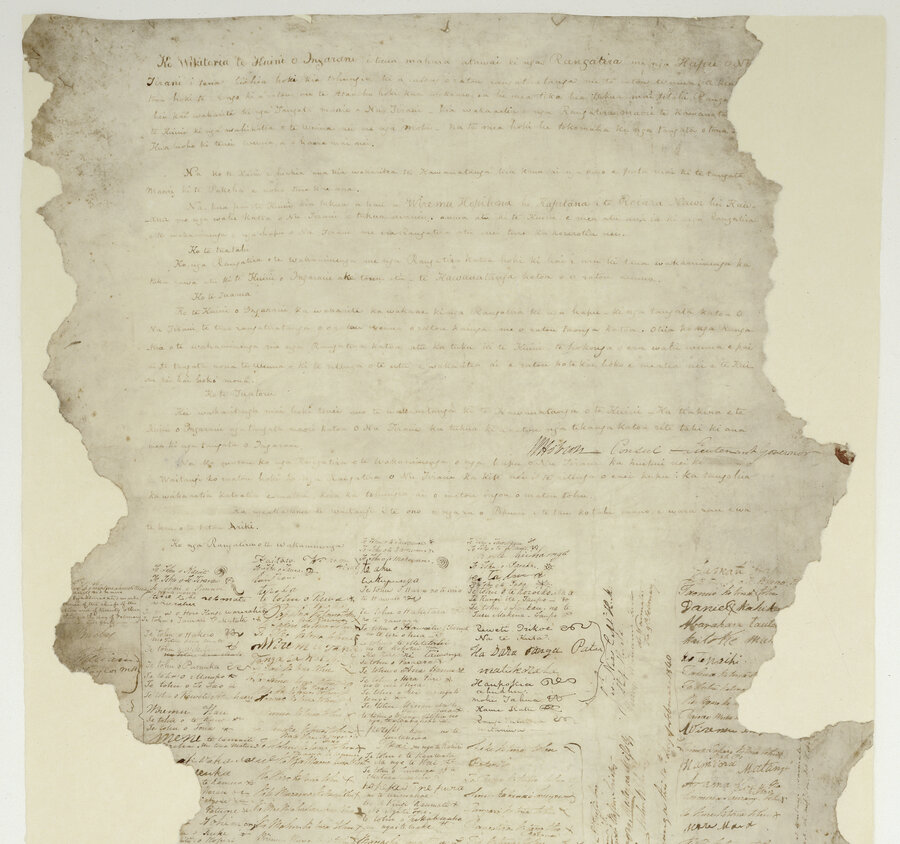
By 1840 the Bay of Islands, in the far north of New Zealand, was a regular port of call for whaling ships, and British settlers and land buyers were arriving fast. Britain sent Captain William Hobson of the Royal Navy to make New Zealand a British colony, with the consent of the Māori chiefs. He arrived in HMS Herald on January 29, and the next day he read a proclamation at Kororāreka: the Crown would not recognize any land title it had not granted or confirmed.
On February 5 the chiefs met Hobson in a tent on the lawn at Waitangi, and the treaty was read to them in English and Māori. Some spoke hard against it. Te Kemara, a Bay of Islands chief, told Hobson, “My land is gone, gone, all gone.” The next meeting was set for the 7th, but the chiefs had brought no food and could not wait, so they gathered again on Thursday, February 6. Nobody had told Hobson, and he came ashore in plain clothes. The missionary printer William Colenso asked whether the chiefs understood what they were signing. “If the Native chiefs do not know the contents of this treaty it is no fault of mine,” Hobson replied. Forty-five chiefs signed that day, and Hobson shook each one’s hand, saying “He iwi tahi tātou,” “We are now one people.” Copies went around the country, and by September some 500 more chiefs had signed. But the two texts did not match. In English, the chiefs gave up their sovereignty to the Queen. In the Māori text they signed, they granted her “governorship” and were promised full chiefly authority over their lands and villages. Britain held to the English version. February 6 is now Waitangi Day, New Zealand’s national day, and often a day of Māori protest.
The whalers in Soon May The Wellerman Come waited on the supply ships of the Weller brothers, who had run a whaling station at Otago, in the South Island, since 1831. Expecting Britain to take over, the Wellers had bought land, and by 1840 they claimed nearly three million acres. Under Hobson’s proclamation, none of it was theirs unless the Crown confirmed it. Meanwhile the whales were running out. By 1840 the Wellers’ Otago station was taking only 14 tons of oil a season, and by the end of 1841 the firm had failed.