The Whale Catchers
“On the twenty-third of March, my boys, we hoisted our topsail.” So begins The Whale Catchers, a song of the Greenland right whale fishery. The crew sets out for the Davis Strait, the icy passage between Greenland and Baffin Island, to hunt the Greenland right whale, now known as the bowhead. It was called the “right” whale to hunt because it was slow, floated when killed, and yielded vast quantities of oil and baleen. British whalers made this grueling Arctic voyage every spring from the late 18th through the mid-19th century, enduring conditions the song captures vividly: “Our finger tops was frozen off, and likewise our toe-nails.”
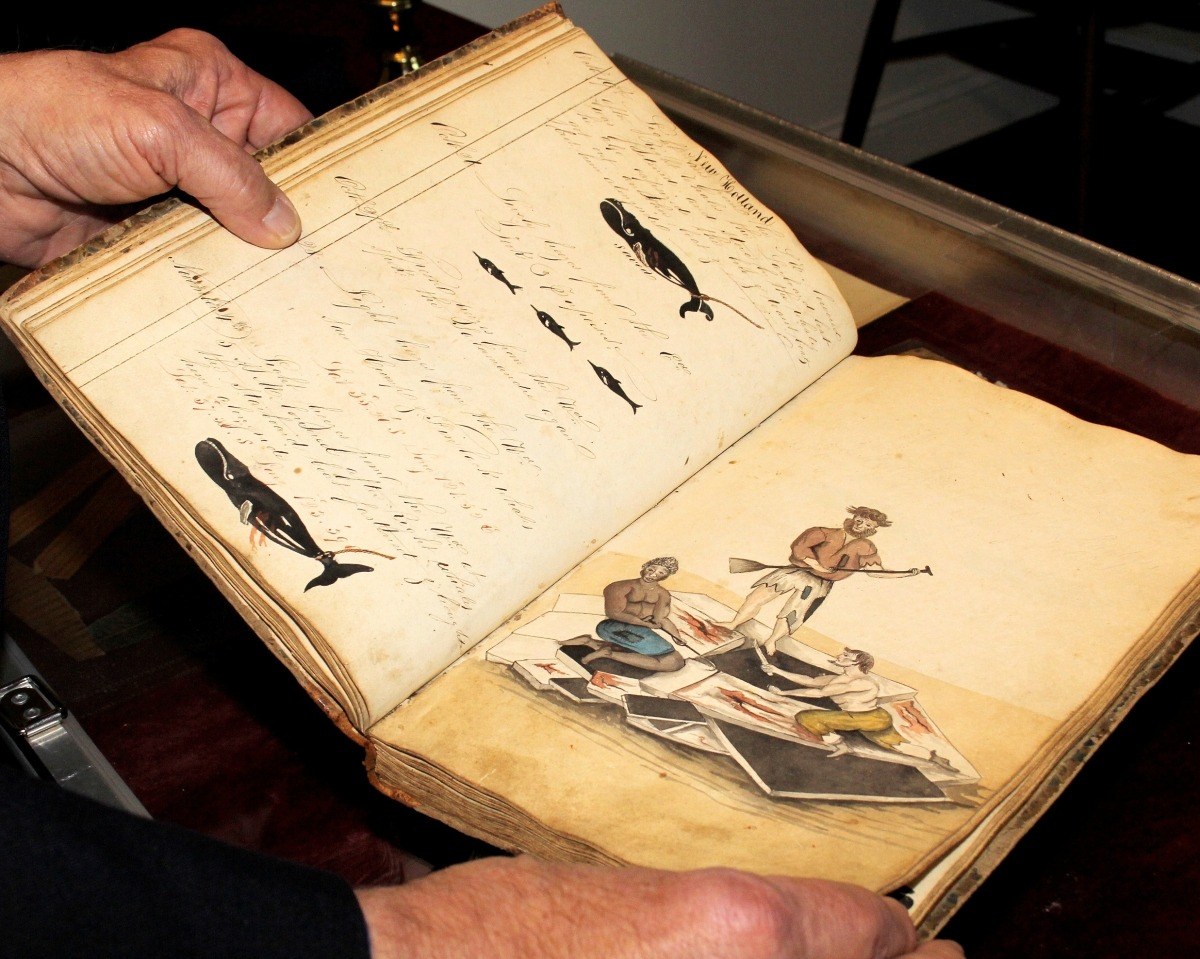
Much of what we know about these voyages comes from the logbooks kept aboard whaling vessels. Captains and mates recorded daily entries noting position, weather, ice conditions, and whale sightings, often using a distinctive visual shorthand: a small stamp of a whale meant a sighting, while a stamp of flukes meant a kill. But the journals were also personal documents, filled with sketches, poems, and observations that bring the whaler’s world to life far beyond the bare navigational record.
Thousands of these logbooks survive today in museum collections. The Mystic Seaport Museum in Connecticut holds one of the world’s largest collections of whaling manuscripts, and the New Bedford Whaling Museum in Massachusetts preserves another vast trove. Researchers continue to mine these records not only for maritime history but for climate science, using centuries of ice and weather observations to study long-term environmental change in the Arctic.