Launch of the Cutty Sark
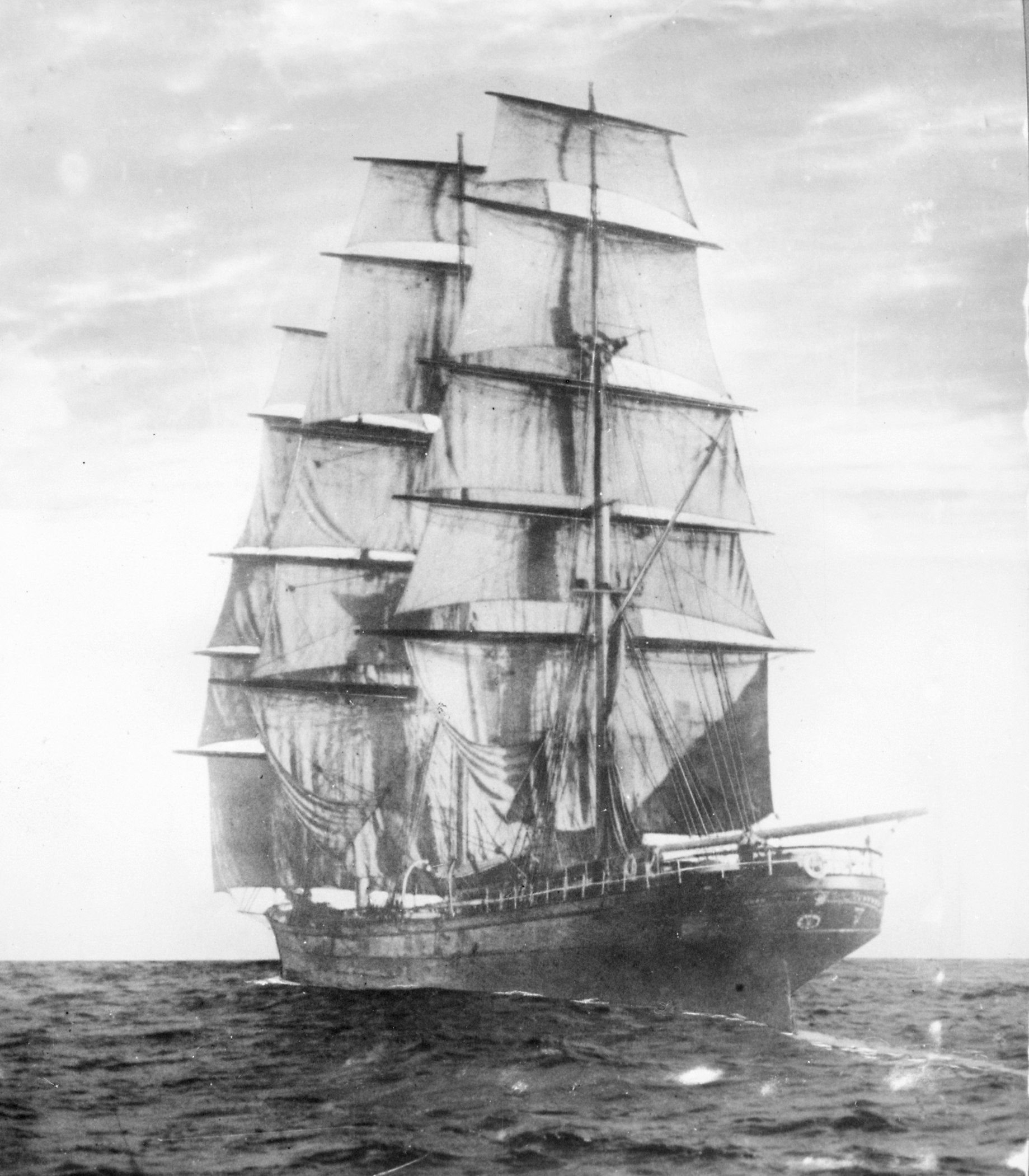
On November 22, 1869, the tea clipper Cutty Sark was launched at Dumbarton, Scotland, five days after the Suez Canal opened to shipping. She had been commissioned by the Scottish shipowner John “Jock” Willis and designed by Hercules Linton, whose firm Scott & Linton went bankrupt during construction; the yard of Denny Brothers finished the job. Willis named her after the short shift worn by the witch Nannie in Robert Burns’s poem Tam o’ Shanter. She was the pinnacle of clipper design: long, narrow, sharp-bowed, with three raking masts.
The Cutty Sark made eight voyages to China for tea, but steamships using the canal were faster to market and the premiums for the first cargo home soon vanished. Her most famous tea race came in 1872, when she and her great rival Thermopylae left Shanghai together on June 18. By mid-August the Cutty Sark was four hundred miles ahead, but a gale in the Indian Ocean tore away her rudder. Captain Moodie refused to put into port; his carpenter built a makeshift rudder from spare timbers at sea, working for six days in heavy weather. She arrived in London only seven days behind the Thermopylae, a performance that made her reputation. In 1883, Willis switched her to the Australian wool trade, where sailing ships still held their own against steam on the long run around the Cape. Under Captain Richard Woodget she set a record of seventy-three days from Sydney to London in 1886.
The Cutty Sark is the last survivor of the world that shanties describe. The Dreadnought celebrates another clipper’s speed and reputation on the Western Ocean run. Clear the Track was sung at the capstan aboard the packet ships that preceded her. Rolling Home belonged to the Australian trade, sung on the homeward passage that gave the Cutty Sark her greatest years. In 1895 she was sold to Portuguese owners and renamed Ferreira, and she might have rotted away entirely had Captain Wilfred Dowman not spotted her in Falmouth harbour in 1922 and bought her back. He restored her original name, and since 1954 she has stood in dry dock at Greenwich, the only surviving tea clipper.