Capture of CSS Florida at Bahia
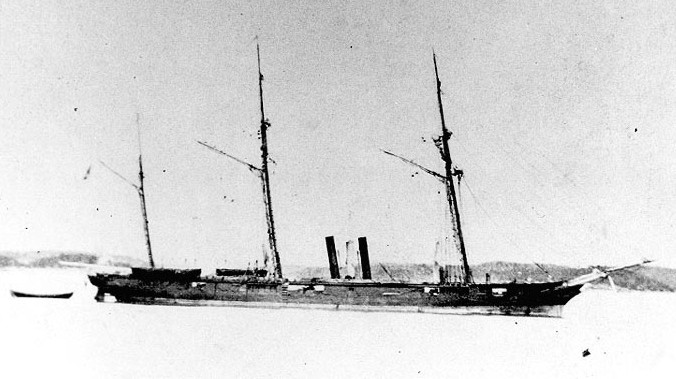
In the early hours of October 7, 1864, with Sherman in Atlanta and the Confederacy in slow collapse, the Union sloop USS Wachusett slipped her cables in the harbor of Salvador, Bahia, Brazil, and rammed the Confederate commerce raider CSS Florida where she lay at anchor. Half the Florida’s crew, including her captain Charles Morris, were ashore. Morris had gone to the opera and was sleeping in a hotel, trusting that Brazilian neutrality would protect his ship. It did not. Commander Napoleon Collins drove the Wachusett into the Florida’s starboard quarter, snapping her mizzenmast, fired several shots into her hull, and had a prize crew aboard within fifteen minutes. By the time Morris reached the waterfront, the Florida was being towed out to sea.
The Florida had been one of the war’s most destructive raiders. Built secretly in Liverpool and commissioned under Captain John Newland Maffitt (“bold Maffitt” of The Florida's Cruise), she captured or destroyed some 37 Union merchant vessels directly, and her offshoots took another 20 or more. Maffitt himself had left the ship eight months earlier due to lingering yellow fever, the same disease he had fought through when he ran the Florida into Mobile Bay in September 1862, so weak he had to be lashed upright on deck.
The capture was an international scandal. Brazil demanded the ship’s return, the prisoners’ release, and Collins’s punishment. Secretary of State Seward apologized and had Collins court-martialed, though the Navy quietly restored him to command afterward. The question of returning the Florida resolved itself on November 28, 1864, when she sank at Hampton Roads after a collision with an army transport. The circumstances were suspicious enough that Admiral David Porter later claimed, by one account, that Seward had said “I wish she was at the bottom of the sea,” and Porter had obliged by sending an engineer to open the sea cocks. Whether or not the story is true, the sinking was remarkably convenient: no ship, no obligation to return her. Few outside of Richmond mourned the loss.