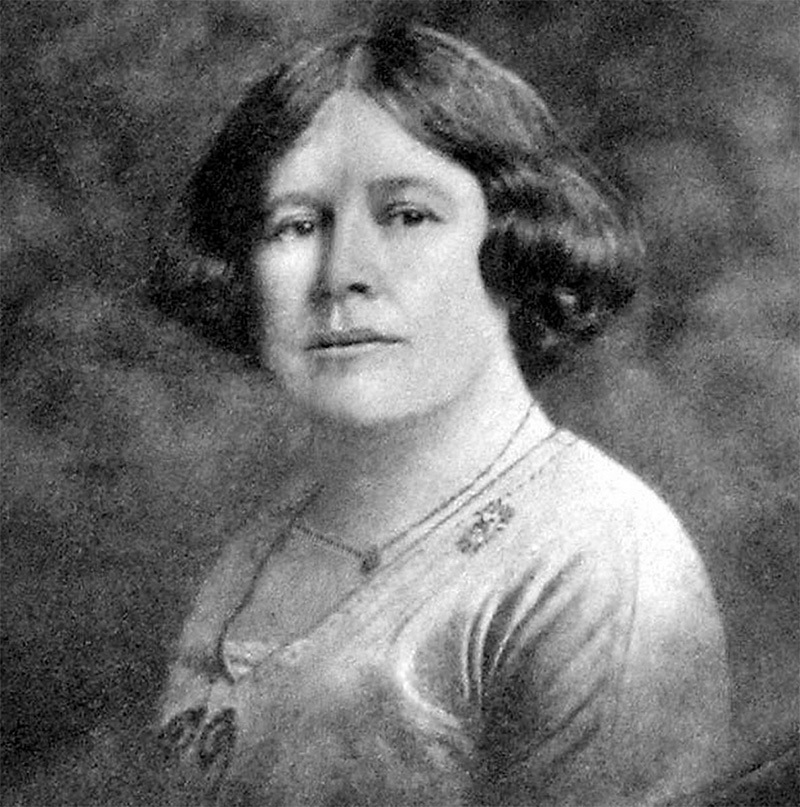
Cicely Fox Smith
Cicely Fox Smith (1882-1954) was an English poet and writer born in Lymm, Cheshire. She briefly lived in Canada before returning to the United Kingdom shortly before the outbreak of World War I. She settled in Hampshire and began writing poetry, often with a nautical theme. In later life, she expanded her writing to various subjects, fiction and non-fiction.
Much of her poetry was written from the sailor’s point of view, with such detailed nautical content that many readers assumed she was male. One correspondent addressed her as “Capt. Fox Smith,” and when corrected, insisted she must at least be “a practical seaman.” She eventually began routinely using the byline “Miss C. Fox Smith.” A 1926 Punch reviewer called her “the poet of the sea.”
Books by Smith included romantic novels, numerous short stories and articles, and several books describing “sailortown.” She published A Book of Shanties, a collection of traditional sea shanties, and Sea Songs of Cicely Fox Smith. She wrote of her experiences rounding the coast of Africa as a guest of the Union-Castle Mail Steamship Co. Ltd. in All the Way Round: Sea Roads to Africa. In the 1940s she began writing children’s sea stories with her sister Margaret (Madge) Scott Smith, plus other travel books, history books, a book about ship models, and the biography Grace Darling.
The artwork of her older brother Philip Wilson Smith, known at the time for his etchings of Elizabethan architecture and oil paintings, illustrates many of her poetry and prose books. Over 70 of her poems have been adapted for singing in the nautical folk song tradition. Stan Hugill was among those who drew on her work.