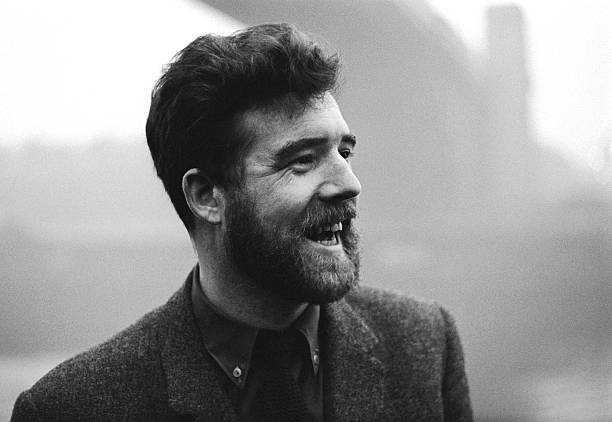
Louis Killen
Louisa “Lou” Jo Killen (1934–2013) was an English folk singer from Gateshead, Tyneside, and a pioneering figure in the British folk revival. A Geordie born and bred, Killen grew up in a musical household where the family sang hymns, cowboy songs, ballads, music hall, and opera.
In 1958, Killen co-founded one of Britain’s first folk clubs in Newcastle upon Tyne, and turned professional in 1961. Killen later recalled: “When I started Folk Song and Ballad in Newcastle in 1958 there weren’t twenty folk clubs in the whole country, and when I left for the States there were maybe three hundred.” In the early 1960s, Killen recorded for Topic Records, including the influential Ballads & Broadsides (1965) and contributed to The Iron Muse compilation of industrial songs.
Killen emigrated to the United States in 1967, working with Pete Seeger before joining The Clancy Brothers in 1971 as replacement for Tommy Makem. During this period, Killen introduced the English concertina to the group’s sound, pioneering it as an accompanying instrument—a style that influenced a generation of revival singers.
In the late 1970s, Killen collaborated with Stan Hugill and the X-Seamen’s Institute on Sea Songs (1979). The album Steady as She Goes (1977), recorded with Jeff Warner, Gerret Warner, and John "Fud" Benson, remains an essential collection of sea songs and chanties. In the 1990s, Killen worked as volunteer coordinator at the San Francisco Maritime Museum, singing chanties and interpreting maritime history for visitors.
A few years before her death, Killen transitioned and adopted the name Louisa Jo. She died in 2013 at the age of 79.