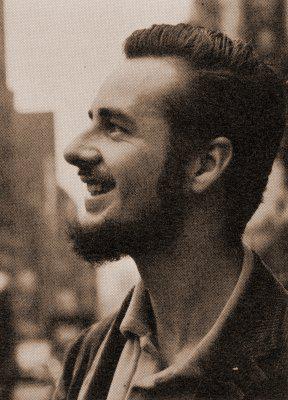
Paul Clayton
Paul Clayton (1931–1967) was an American folksinger, folklorist, and song collector who was prominent in the folk music revival of the 1950s and 1960s. Born Paul Clayton Worthington in New Bedford, Massachusetts, he developed an early love of music through his grandparents—his grandfather Charles Hardy sang songs picked up from seafarers, while his grandmother contributed songs from Prince Edward Island.
Clayton earned a master’s degree in folklore at the University of Virginia in 1957, specializing in traditional music, particularly New England sea shanties and Appalachian songs. He began recording shortly after, first for small specialty labels before joining Folkways Records in 1956, where he recorded six solo albums. His 1956 album Whaling and Sailing Songs remains an important document of maritime folk music. In 1959, he collaborated with The Foc'sle Singers (including Dave Van Ronk, Roger Abrahams, and Bob Yellin) on Foc'sle Songs and Shanties, drawing repertoire from BBC field recordings of English shantymen.
A prominent figure in the Greenwich Village folk scene, Clayton was a mentor and friend to Bob Dylan during the early years of Dylan’s career. A song Clayton wrote became the basis for Dylan’s “Don’t Think Twice, It’s All Right”—a connection Dylan acknowledged in his 1985 album Biograph. Clayton also recorded the first nationally charted version of Woody Guthrie’s “This Land Is Your Land.”
Clayton performed on guitar, lute, and Appalachian dulcimer, recording over a dozen albums of traditional and original folk music. He struggled with depression and faced persecution for his homosexuality; he died by suicide in 1967, at the age of thirty-six.