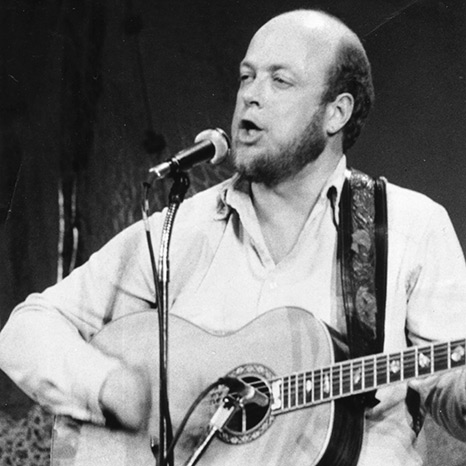
Stan Rogers
Stanley Allison Rogers (November 29, 1949 – June 2, 1983) was a Canadian folk musician and songwriter known for his rich baritone voice and finely crafted folk songs, often written and performed in a traditional Celtic style. He is perhaps best known for the rousing a cappella anthem Northwest Passage, which was ranked the fourth greatest Canadian song of all time on CBC Radio One’s “50 Tracks” series and is often hailed as Canada’s unofficial national anthem.
Rogers was born in Hamilton, Ontario, but often spent summers visiting family in Guysborough County, Nova Scotia. It was there that he became familiar with Maritime life, an influence which had a profound impact on his music. His songs frequently drew inspiration from Canadian history and working people’s daily lives, especially from the fishing villages of the Maritime provinces and the farms of the Canadian prairies and Great Lakes.
Peter Yarrow of Peter, Paul and Mary called Rogers “an extraordinary talent, the likes of which we haven’t seen since Bob Dylan,” while Tom Paxton said Rogers “was to Canada what Woody Guthrie was to the United States.”
He died tragically at age 33 in a fire aboard Air Canada Flight 797 at the Greater Cincinnati Airport on June 2, 1983, while traveling home from the Kerrville Folk Festival. The disaster led to sweeping aviation safety reforms, including mandatory smoke detectors in lavatories and floor-level emergency lighting. Despite releasing only four albums during his lifetime, his songs—including Barrett’s Privateers and The Mary Ellen Carter—are woven into the fabric of North American maritime culture and remain perennial favourites at campfires and song circles.
His legacy continues through the annual Stan Rogers Folk Festival held in Canso, Nova Scotia, and through his brother Garnet Rogers and son Nathan Rogers, both established Canadian folk artists. He was inducted into the Canadian Songwriters Hall of Fame in 2019.