Heart of Oak Premieres at Drury Lane
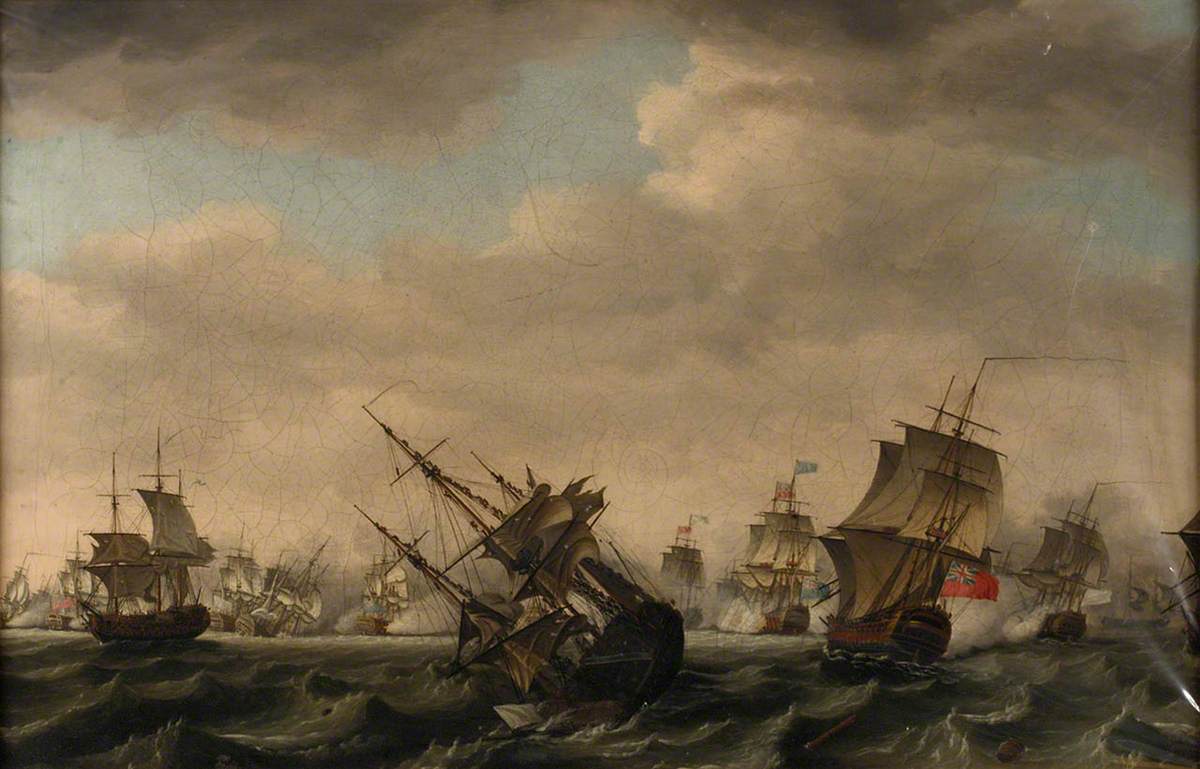
In 1759, the fourth year of the Seven Years’ War, France planned to invade Britain. Troops gathered on the French coast, and flat-bottomed barges were built to carry them across the Channel. In July, Admiral Rodney bombarded Le Havre for two days and destroyed many of the barges. British forces then won a run of victories: Minden on August 1, Lagos on August 19, Quebec on September 13. On November 20, Admiral Hawke chased the French fleet from Brest into Quiberon Bay in a gale and destroyed or scattered it among the rocks and shoals, ending the invasion threat. Britons called 1759 the “wonderful year.”
December 31, 1759, was the opening night of Harlequin’s Invasion, a holiday play by David Garrick at the Theatre Royal, Drury Lane in London. Its most popular song was Heart of Oak, with words by Garrick and music by William Boyce, first sung that night by Samuel Champnes. It begins with the year itself: “Come, cheer up, my lads! ‘tis to glory we steer, / To add something more to this wonderful year.” A later verse mocks the French invasion barges: “But should their flat bottoms in darkness get o’er, / Still Britons they’ll find to receive them on shore.”
The song outlived the war. In 1768 John Dickinson set his American Liberty Song to Boyce’s tune, and Heart of Oak is still the official march of the Royal Navy, the Royal Canadian Navy and the Royal New Zealand Navy.