South Australia
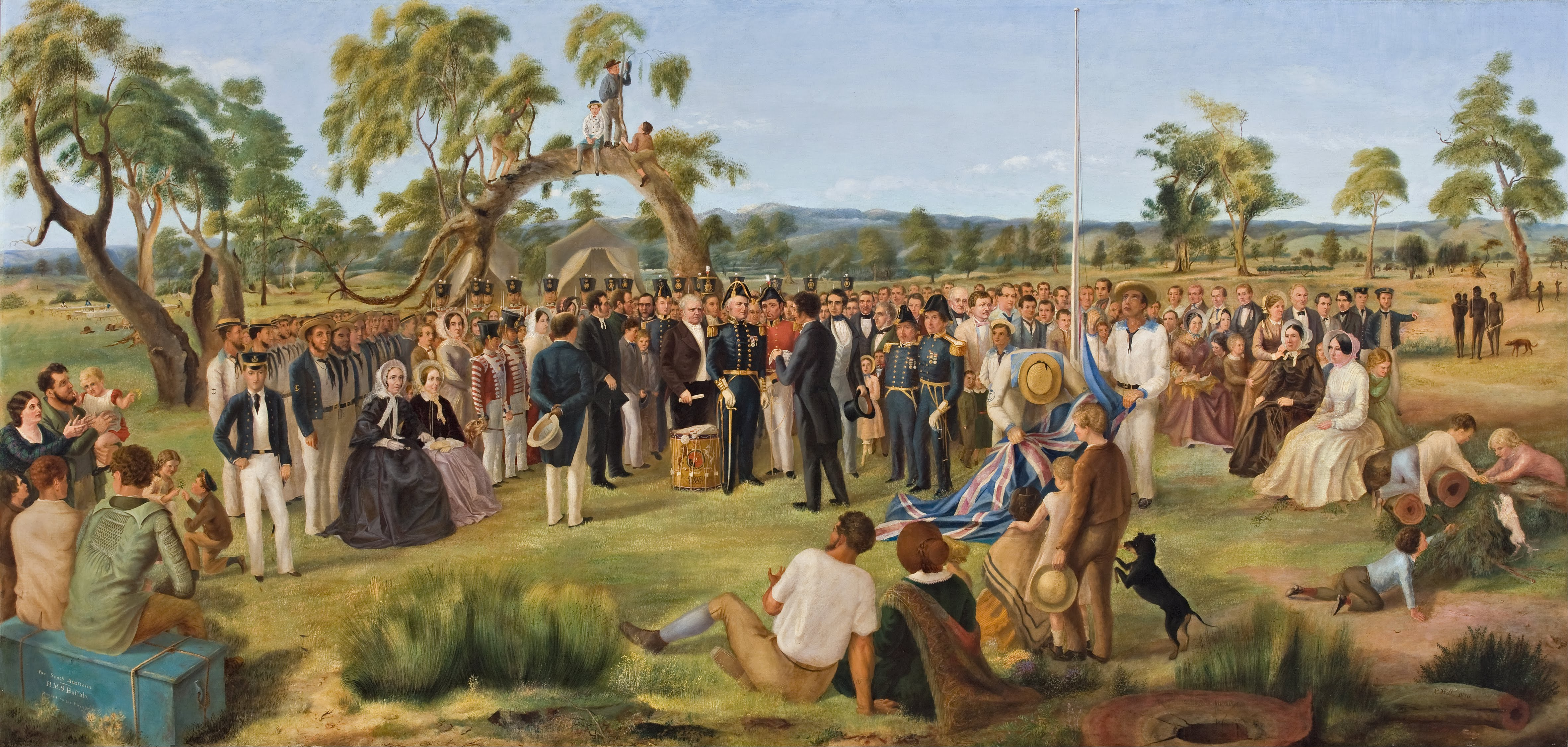
On the afternoon of December 28, 1836, some 550 colonists gathered on the shore of Holdfast Bay, near present-day Glenelg, to hear Captain John Hindmarsh read the proclamation authorizing his commission as Governor of the new Province of South Australia. The colony had been established by act of Parliament in 1834, but this was the moment it became real on the ground. Hindmarsh asked the settlers to prove themselves “worthy to be the Founders of a great free colony.”
That word “free” was not decoration. By 1836, Britain had been shipping convicts to Australia for nearly fifty years, first to New South Wales, then to Van Diemen’s Land. English sailors knew the Australian run as a convict route. South Australia was founded on a different principle entirely: no transported prisoners, no penal labor. Settlement would be funded by land sales, attracting free emigrants. It was an experiment in colonization by commerce rather than punishment.
What followed was a wool boom. By the 1850s and 1860s, clipper ships were running regularly between London and the Australian ports of Melbourne and Sydney, carrying emigrants out and wool back. These voyages put South Australia into the repertoire of English sailors, and the capstan shanty South Australia likely dates from this period. According to Roll and Go, the song “probably belongs to the days of British wool-clippers.” In Harlow’s version, the sailors make straight for Mother Shilling’s inn at the head of Sandridge Railroad pier, where sheoak (a rough local beer) flows freely and the girls are waiting to dance.