Death of Admiral Benbow
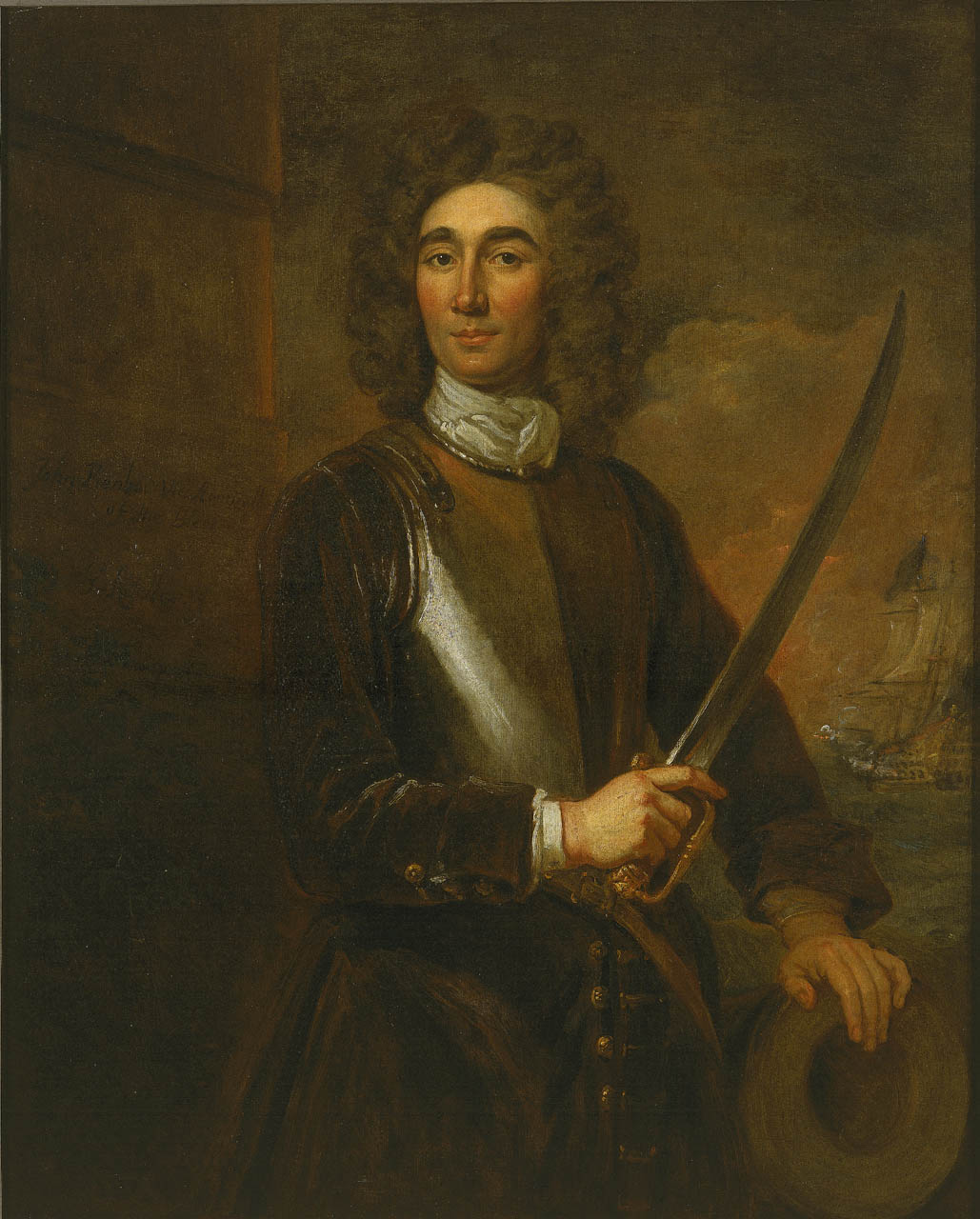
John Benbow was born the son of a tanner in Shrewsbury, England, in 1653. He went to sea young and spent years in the merchant service before joining the Royal Navy, where he distinguished himself in actions against Barbary corsairs and in the Nine Years’ War against France. By the turn of the eighteenth century he had risen to the rank of vice-admiral, a remarkable career for a man of no particular birth or connections. He was well liked by common sailors and had earned a reputation for personal courage that bordered on recklessness.
In the summer of 1702, early in the War of the Spanish Succession, Benbow was commanding a squadron of seven ships in the West Indies when he encountered a smaller French force under Jean-Baptiste du Casse off Santa Marta, on the coast of modern Colombia. What followed was not one battle but a running fight over several days, during which most of Benbow’s captains hung back and refused to engage the enemy. Benbow pressed on with only the Ruby and his flagship Breda in close support. On the fourth day a chain shot shattered his right leg below the knee, but he refused to go below, ordering a cradle rigged on the quarterdeck so he could continue directing the fight. The engagement ended inconclusively; the French escaped, and the battered Breda limped back to Port Royal.
Benbow never recovered. He died of his wounds in Kingston, Jamaica, on November 4, 1702, and was buried in the parish church there. His cowardly captains were court-martialed: two were shot, and the rest cashiered (dismissed from service in disgrace). The affair became one of the most famous episodes in English naval history, and Benbow’s stubborn courage made him a folk hero. He is remembered in at least two songs: Brave Admiral Benbow, a forecastle favorite that tells the story in some detail, and Admiral Benbow, a shorter ballad sung to the tune of Samuel Hall.