Richard Henry Dana, Before the Mast
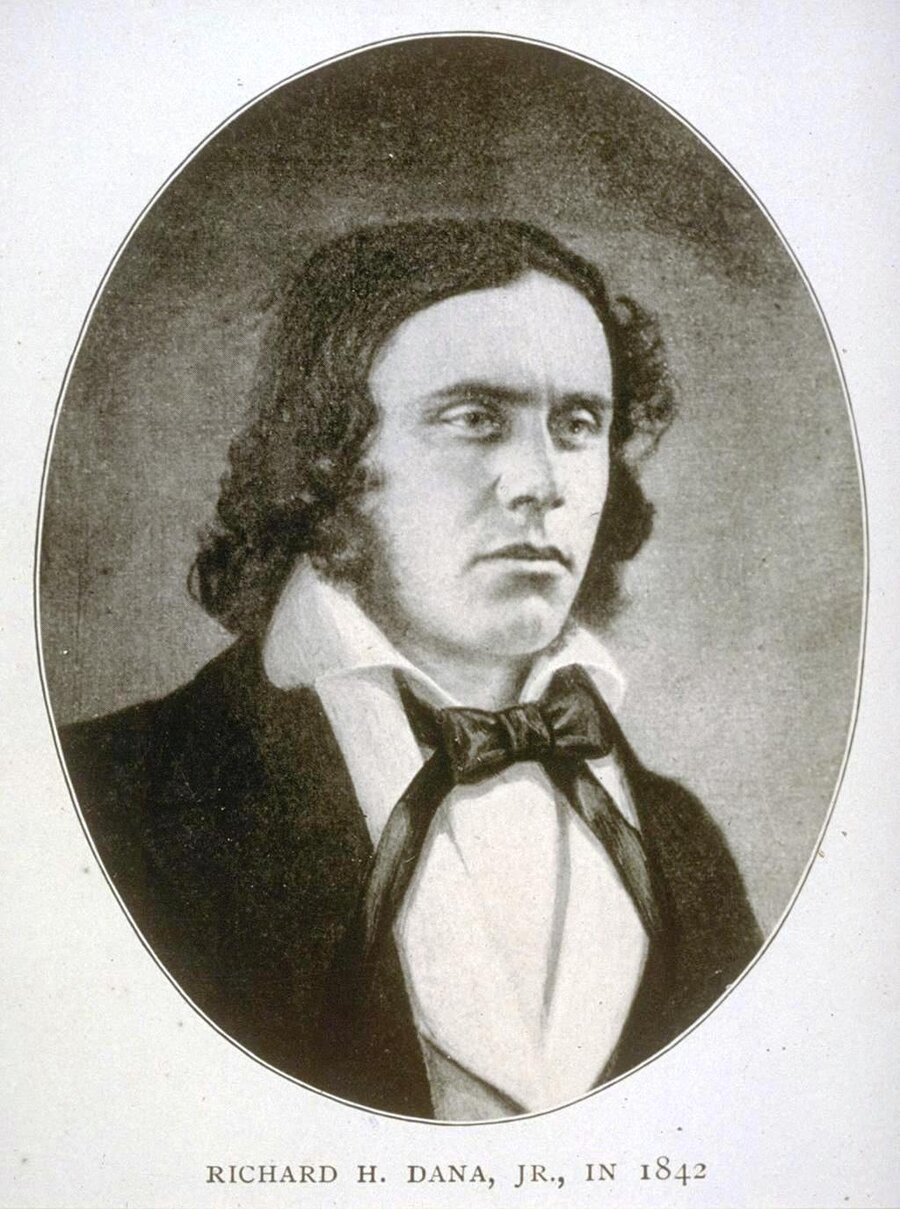
In the summer of 1834, Richard Henry Dana Jr. was a 19-year-old Harvard student from a well-known Boston family, and his eyes had grown so weak that he could no longer study. Hoping to cure them “by an entire change of life, and by a long absence from books and study,” he signed on as a common sailor in the brig Pilgrim, bound around Cape Horn to California to trade for cattle hides. His book opens: “The fourteenth of August was the day fixed upon for the sailing of the brig Pilgrim.” He came aboard at noon “in full sea-rig,” sure he would pass for a jack tar, and was, he admitted, “known for a landsman by every one on board as soon as I hove in sight.” The Pilgrim hauled out into the stream and anchored for the night, and it was three more days before she got to sea.
Dana spent more than a year on the California coast, curing and loading hides, and came home in the ship Alert in September 1836. At San Pedro he watched Captain Thompson flog two of his shipmates, and lying awake in the forecastle that night he “vowed that if God should ever give me the means, I would do something to redress the grievances and relieve the sufferings of that poor class of beings, of whom I then was one.” Two Years Before the Mast came out in 1840 and was an immediate success. Dana became a lawyer who often represented sailors, wrote a handbook of their legal rights, The Seaman’s Friend (1841), and helped build the case against flogging, which Congress banned in 1850. When he came back to California in 1859, he looked out from a San Francisco hotel over a city of steeples, wharves and clipper ships, built on the cove where he had once beached the Alert’s boats.
Dana wrote down a good deal about how sailors sang at work. After the flogging, the sullen crew catted the anchor without Cheer'ly Men, the hauling song “in which all hands join in the chorus.” They pulled “a long, heavy, silent pull,” and since, “as sailors say a song is as good as ten men,” the anchor came up “pretty slowly.” At San Diego, two English man-of-war’s men in another ship’s crew sang through the old favorites, and he was glad to find that Tom Bowline and The Bay of Biscay O “still held their places.” When the Alert finally sailed for home, her topsails went up to “Cheerily, men!” From 1843 she was a New London whaler, until she was captured and burned near the Azores in September 1862 by the Confederate raider of The Alabama.