First Iron Ore Through the Soo Locks
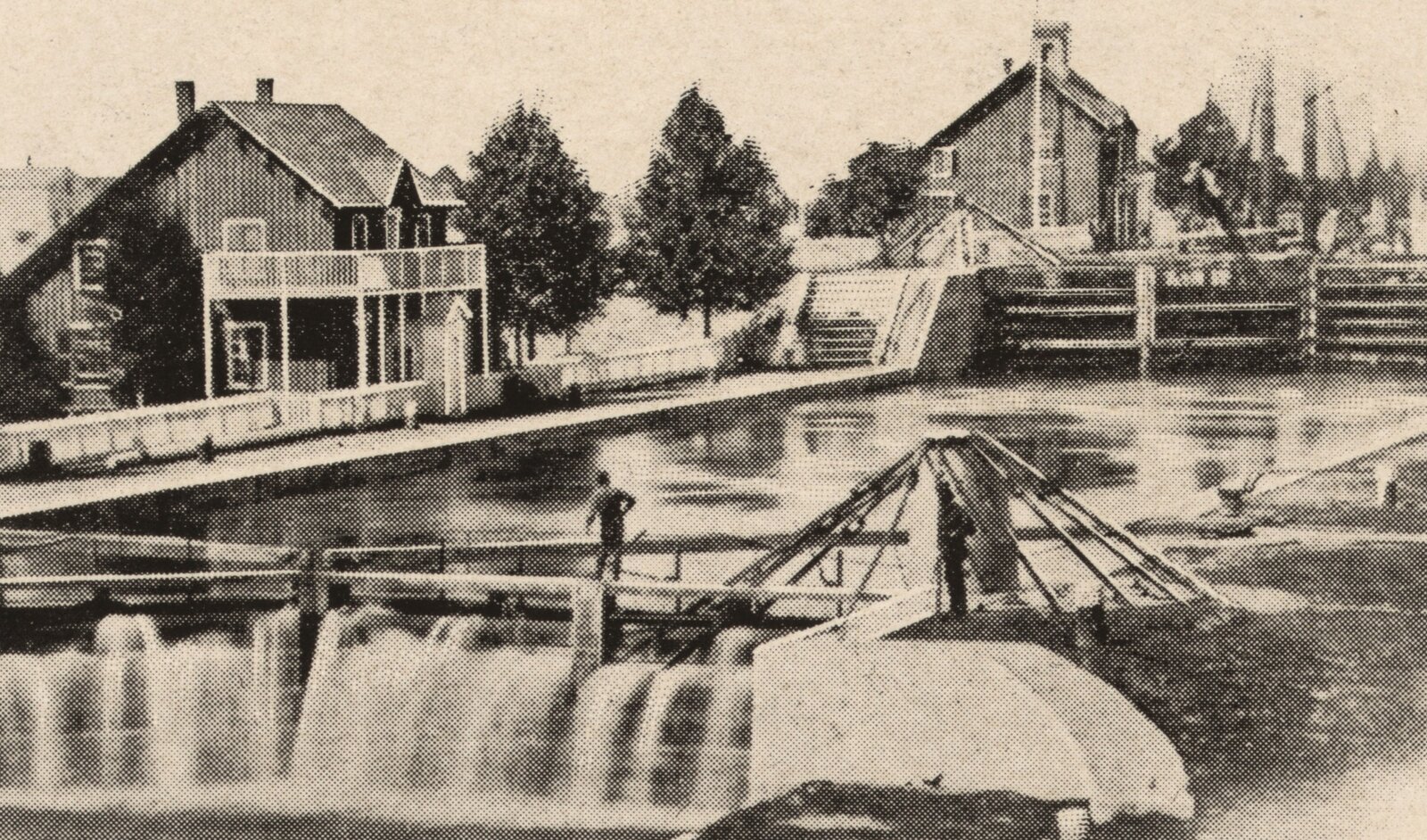
Lake Superior drains into the lower Great Lakes through the rapids of the St. Marys River at Sault Ste. Marie, which fall about 21 feet. Until 1855 no ship could pass them. Cargo was unloaded on one side, carted around the rapids, and loaded onto another vessel on the other. Ralph D. Williams, in his 1907 history of the Marquette iron trade, wrote that one old gray horse “had the distinguished honor in 1845 of hauling every pound of freight that passed to and from Lake Superior.” Ships bound for the upper lake were dragged overland on rollers, as one sailor remembered, “the same as buildings are sometimes moved.” The last ship hauled across was the side-wheel steamer Sam Ward, in 1853, for the Detroit shipowner Eber Ward. By then copper and iron had been found on the upper lake. That same year, a shipment of 152 tons of iron ore from the mines near Marquette needed four vessels and a portage to reach the lower lakes.
In 1852 Congress granted Michigan 750,000 acres of public land to pay for a canal around the rapids. Charles T. Harvey, a young agent for the Fairbanks scale company who had come to the Sault to recover from typhoid fever, took charge of the work and broke ground in June 1853. At times 2,000 men worked on the mile-long cut, and in 1854 cholera killed “fully one-tenth of the workmen.” The canal cost just under a million dollars, and its two locks opened in June 1855.
On August 14 the brig Columbia, under Captain Wells, left Marquette with 132 tons of ore for the Cleveland Iron Mining Company. Marquette’s little dock was flat, with no chutes, so the crew wheeled the ore aboard in barrows, for 25 cents an hour. On August 17, 1855, the Columbia passed through the locks, the first ore cargo to do so. That season the mines shipped 1,449 tons. By 1890 Lake Superior ports were shipping nine million tons a year.
The ore trade filled the lakes with schooners. One of them, the E. C. Roberts, carried a locomotive up the lake in 1857 for Marquette’s new ore railroad. She is the schooner of Red Iron Ore. In the song she loads at Escanaba, on Lake Michigan, where a railroad reached the ore docks in the 1860s and gave the mines a route that avoided the Soo. Copper from the Keweenaw Peninsula came down through the locks too. In the 1890s the steamers of the Ward line carried it from Houghton and Hancock. Black deckhands hired at Detroit loaded the copper with hand trucks and sang The Ward Line as they worked: “City folks, dey’s gon’ to bed, / But we push coppa till we’s dead.”